Over a decade ago, the term high performance arrived in my workplace as our newest and most important KPI. It was vague, ever-elusive, and relentlessly pursued. Over time, what I saw in practice was burnout, toxic cultures, and hollow wins. I saw first-hand how chasing performance came at the cost of people – their health, their relationships, even their values.
That experience sparked a question that’s driven my work ever since: Can we achieve high performance without compromising our wellbeing? The good news is that the answer, backed by years of research and practice, is a resounding yes!
But here’s the crazy part – only 2% of employees globally can sustain high performance across multiple cycles. That’s according to a recent report by Culture Amp (2025), which analysed over 560,000 employees across 1500 companies. Despite all the effort, frameworks and training programs out there, 83% of employees are never classified as high performing at all.
With six weeks left in the year, I’m seeing many teams already depleted. Worse still, many are feeling anxious than ever about what next year will bring – questioning how they will succeed in 2026 when it’s clear we’ll be asked to do more, with fewer resources to meet it.
So, are we failing high performance not because it’s the wrong goal, but because we’re going about it the wrong way?
If we want to navigate our challenges and achieve high performance over the long-term, we need a smarter, more sustainable system.
That means strengthening what I call the Sustainable High Performance Stack – our mindset, skillset, and toolset. And no, this isn’t just about the latest AI platform or productivity hack. (We’re not doing particularly well with that either — McKinsey reports that while 80% of companies say they’re using the latest AI tools, the same percentage have seen no significant impact on topline or bottom-line performance.)
Our real tools are much closer to home. They include our energy, our relationships, our time, focus, and autonomy. When we use these resources intentionally, we build the capacity to go faster and further, and sustain performance not once, but over and over again.
Sustainable High Performance Is a Team Sport
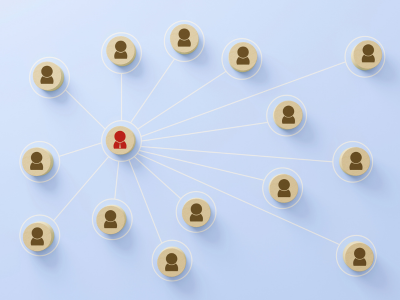
Strong relationships are the invisible infrastructure of performance. Yet they are often overlooked and rarely measured.
In my most recent Masterclass, I asked participants to identify the tools they needed to better leverage in order to sustain performance. The overwhelming answer wasn’t tech or systems, it was relationships.
We know, as Chris Peterson once said, that “other people matter”. In work and life, relationships carry us through the hard times and support our resilience, but they are also a source of motivation and engagement. But we only access these benefits through high-quality connections – and this isn’t about proximity, but trust and empathy.
Interestingly, a recent meta-analysis by GeckHong Yeo and colleagues (2025) found that coworker support has a stronger and more direct impact on performance than leader support. Whether it’s emotional encouragement, practical advice or help, or someone stepping in when you’re stretched in, peer relationships fuels both wellbeing and output. Gallup backs this up — employees are significantly more engaged when they have a great friend at work.
But this isn’t just about feeling supported — it’s about how high-performing teams function. They don’t just share goals, they share trust, context, and care. They build psychological safety and reciprocity — the glue that holds performance together under pressure. They don’t compete for the spotlight, they leverage each other’s strengths, step in when needed, step in when needed, and adapt together. They know the sum is always greater than the parts.
Professional cycling teams offer the perfect metaphor (thanks again to the Culture Amp report for this). In a peloton, the lead rider cuts through the wind, allowing others to conserve energy. But they rotate roles because no one can lead forever. That rhythm isn’t a sign of weakness. It’s what enables collective success.
That’s how we need to start thinking about high performance — not as a group of individuals chasing outcomes, but as a system of humans achieving together, sustainably.
Relationships Fuel Our Energy — and Energy Fuels Performance
When performance dips, most people instinctively reach for more effort — but what we actually need is better energy. And one of the most overlooked sources of energy at work isn’t food, sleep, or exercise — it’s our relationships.
Workplace energy is relational. Regardless of whether you’re an introvert or extrovert, the people around you shape how you show up. Supportive, trusting relationships generate momentum and motivation. Tense, critical, or draining ones sap it. As a result, even great roles become exhausting when relationships falter, and even tough jobs feel lighter when you’re backed by the right people.
And we’re not just passive recipients of this energy — we’re contributors, too. Every interaction is a chance to lift or drain. Small acts — a moment of appreciation, a kind word, a check-in that shows you care — may seem minor, but they build emotional bank accounts that buffer stress and deepen engagement. These micro-interactions don’t take much time — but they have lasting impact.
There is no excuse to not have time for this. As AI and automation take over more low-value tasks, we’re gaining back something every team is desperate for: time. Studies show that AI is already saving many professionals three to five hours a week. But here’s the kicker: 83% of people who gained time said they wasted at least a quarter of it.
That’s not the tech’s fault but our own!
Energy is not just a personal resource — it’s a team advantage. And relationships are where it starts.
Leaders Create the Conditions for Connection
If strong coworker relationships are the engine of performance, then leaders are the ones who build or block the road. While peer support has a more direct impact on performance, research shows that leader support plays a critical indirect role as they create the conditions where peer support can thrive (Yeo et al, 2025). In other words, leaders influence performance by shaping the social climate of the team.
At the heart of this is psychological safety. Leaders either foster it, or they erode it. And it can’t just be a poster on the wall, or something we say we have. Psychological safety is visible in the everyday behaviours a team tolerates or celebrates. Do people speak up, share their mistakes, or ask for help and feedback? Or are they scanning for threats, avoiding blame, and hiding behind silence? The answer is almost always a reflection of leadership.
Psychological safety enables the vulnerability required for trust and belonging to grow. And it’s trust that turns relationships into a renewable source of energy and performance. That’s why leaders must go beyond tasks and targets. They need to prune what’s toxic, nourish what’s healthy, and ser the tone for …
The best leaders I know create safety for others to fail, reflect, reset, and re-engage. And that’s the kind of leadership we need more of – not just to survive change that’s coming, but to shape what’s possible through it.
We’ve spent years trying to optimise performance through systems, skills, and tech but we’ve consistently overlooked one of the most powerful levers of all, our relationships.
If we want to get better at sustaining performance — not just delivering it in short bursts — we need to design for how performance actually works. It’s not just about effort or execution. It’s about people.
That means valuing how we work together just as much as what we get done.
In the race for high performance, it’s not the fastest teams that win — it’s the most connected.
So, how are you leveraging your greatest resource: your relationships?