What Happens When All That’s Left Is the Hard Stuff?
We’ve spent years trying to reduce our workloads.
And technology is finally helping us do that, which is super exciting.
But what happens when AI takes away the easier work and leaves us with all the hard stuff?
It’s a question I’ve been thinking about since spending two days recently building AI agents…
It was an interesting course – I was learning, experimenting, solving problems and exploring what’s possible with technology that would have seemed extraordinary only a few years ago. And I loved it!
But by the end of each day, I was absolutely spent… Not physically but cognitively.
My brain felt like it had been working at full capacity all day, and I had very little left to give.
And it got me thinking…
I keep arguing that AI will take care of a lot of the repetitive and mundane work, freeing us to focus on the things humans do best – more creative thinking and problem-solving, better decisions, deeper relationships and more meaningful contribution.
That’s an exciting future but there’s something we may be overlooking…
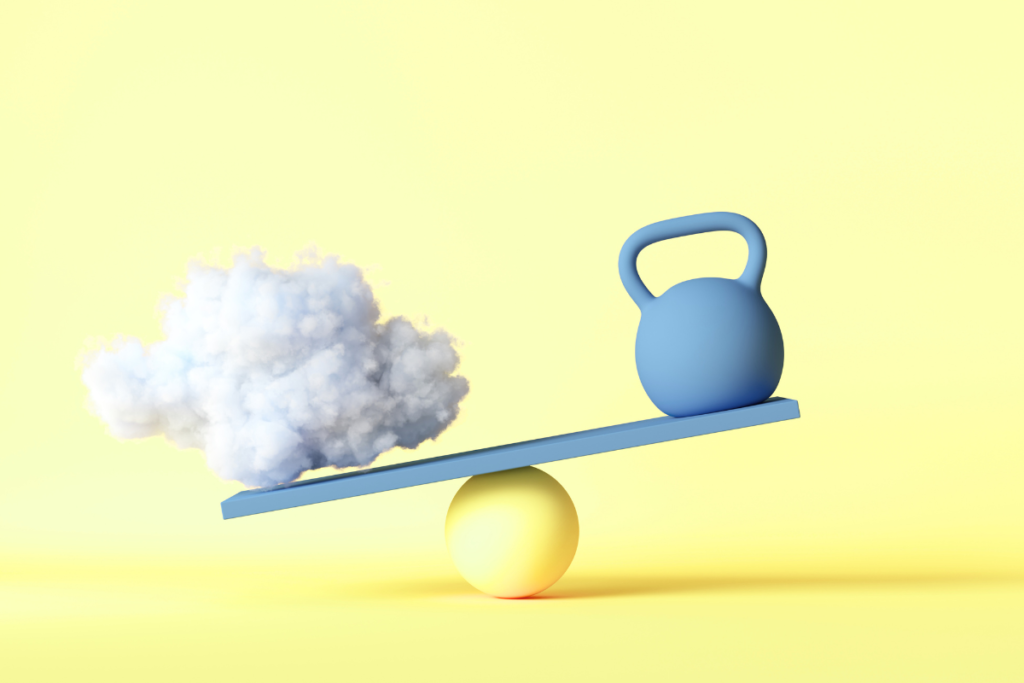
What if the work we’re freeing ourselves up to do is also the work that demands the most from us?
Less Work Doesn’t Mean Less Effort
Think about the rhythm of our typical working day.
We move between different types of activities. Some require intense concentration, judgement or creativity. Others are more familiar, predictable or routine.
Now we could argue that not all of that routine work is enjoyable. And I’m definitely not suggesting we should hold on to unnecessary administration just because it gives us something easier to do.
But I’ve started wondering whether some of those less demanding activities also give us a change of pace. Like a chance to shift gears between the things that require more of our attention.
So, what then happens if more of those activities disappear? If our days become increasingly filled with difficult decisions, complex problems, creative challenges and emotionally demanding conversations?
We may be doing less work in terms of the number of tasks. But could we end up working harder in terms of the cognitive effort required?
I have heard neuroscientist Professor Joel Pearson talk about cognitive upsizing – using the capacity AI creates to stretch ourselves with more challenging and meaningful thinking.
I love that ambition but it does make me question what happens when more of our working day demands that level of effort.
AI might reduce our workload without reducing the demands of work.
And that’s a distinction I think deserves more attention.
The Hidden Cost of Cognitive Effort
Research into cognitive fatigue adds an interesting perspective here.
A 2025 study published in The Journal of Neuroscience found that after repeated demanding mental activity, participants reported greater fatigue and became less willing to take on additional cognitive effort for a reward.
Their performance on the demanding task didn’t necessarily decline. They could still do the work. But their willingness to keep exerting effort had changed. Now the study examined repeated mental effort, not working days shaped by AI but it does make me wonder what happens when demanding tasks fill more of our time.
Because we often judge how well someone is performing by what they’re producing.
Are they meeting expectations? Delivering results? Getting things done?
But what if they’re continuing to perform while the effort required to sustain that performance is increasing?
What if the output looks fine, but the person producing it is becoming progressively more depleted?
Are we paying enough attention to the demands of the work, not just the amount of work being done?
And this matters because we’re not starting from a great place when it comes to wellbeing.
According to Gallup’s State of the Global Workplace 2026, 49% of Australian and New Zealand employees reported experiencing significant stress the previous day. And some studies would suggest that close to 50% of working Australians have experienced burnout recently (CMHAA, 2025; Beyond Blue, 2025; Sonder, 2026). And that’s before we consider what happens if AI enables us to fit even more demanding work into our days.
My concern is that unless we’re deliberate about how we introduce AI and redesign work, we could end up accelerating the very stress and burnout we’ve been focused on for years and we’re hoping technology might help us reduce.
And that’s not because AI itself is inherently exhausting but because we may simply raise our expectations of what people can deliver, without changing the conditions in which they’re expected to deliver it.
Are We Redesigning Work For The Humans Doing It?
This is where I think the conversation about AI and the future of work needs to go next.
We’re investing enormous energy into understanding what technology can do.
How much time can it save? Which tasks can it automate? What new capabilities can it unlock?
But what about the people working alongside it? I mean how many demanding activities can we reasonably expect someone to do back-to-back?
If we’re creating a future where humans spend more of their time on higher-value, higher-demand work, we may need to rethink some of our assumptions about what a productive working day should look like.
Perhaps we need to be a little bolder about what that could mean…
- Could AI make a four-day working week not just possible, but a smarter way to sustain performance?
- Could we rethink the traditional nine-to-five and experiment with reduced daily working hours?
- Could we create more space between cognitively demanding activities rather than filling every available moment?
- Or could some of the time AI gives us back simply become time that people get to keep? More time to recover, to exercise, to spend with family and friends, to learn, or to pursue interests outside work or just to finish the day with something left in the tank.
And what if working less wasn’t a compromise on performance, but part of how we made stronger performance possible?
I’ve written before about the capacity AI is creating and the choices we have about where to invest it, including in my new whitepaper.
And I remain incredibly optimistic about what this technology could make possible.
My hope is that we use AI to create not just more productive organisations, but better workplaces and better lives. Places where people can contribute in more meaningful ways, develop their capabilities and achieve extraordinary things, while still having the time and energy to enjoy their work and life.
That’s what sustainable high performance is really about.
And perhaps this is one of the most important choices we’ll make as AI becomes a bigger part of our working lives…
Will we use the capacity it creates to keep increasing the demands on people?
Or will we use some of it to rethink what a genuinely better working life could look like?
So, how will we design the day where people can do that work well and still have something left when it’s done?