Over the past 18 months, I’ve asked around 1,200 people in my keynotes and workshops a simple question:
What skill or capability do you think will be most valuable to your organisation going forward?
One answer keeps appearing at or near the top.
Empathy.
I find that interesting.
Five or ten years ago, I rarely heard empathy feature prominently in conversations about organisational performance.
For years, empathy, curiosity, emotional intelligence, authenticity and creativity sat under the rather dismissive label of ‘soft skills’. They rarely received the same attention as technical expertise, commercial acumen, or execution.
But that is changing.
And lately, I’ve been wondering whether years of undervaluing these capabilities also shaped how we see them in ourselves.
What We Dismiss in Ourselves
There’s something interesting about the capabilities that come naturally to us.
We often struggle to recognise them as capabilities at all.
We say things like:
I’m just good with people.
I’ve always been curious.
I can usually read the room.
People just tend to open up to me.
I’m just good at making complicated things simple.
And there’s that little word…
Just.
When something comes naturally, it can feel ordinary. We can assume everyone else can do it too.
And because it doesn’t require the same conscious effort as something we’ve had to work hard to learn, we can underestimate its value.
I see this regularly when I work with people on their strengths.
We’ll identify something they do particularly well and, rather than owning it, they’ll immediately minimise it.
“Oh, that’s just what I do.”
“That’s nothing special.”
“Doesn’t everyone do that?”
Sometimes we’re simply better at noticing our weaknesses than our strengths.
Sometimes we’re uncomfortable talking about what we’re good at.
And sometimes we’ve spent years in environments that didn’t particularly value that capability in the first place.
Because workplaces teach us what is valuable too.
For decades, organisations have been very clear about the capabilities they measure, reward and develop. Technical expertise was valuable. Knowledge was valuable. Results were valuable. Efficiency was valuable.
Human capabilities were often harder to measure, less likely to appear on a spreadsheet and more likely to be treated as personality traits.
And I wonder whether we absorbed some of that message.
If our workplaces undervalued these capabilities, perhaps it’s unsurprising that we learnt to undervalue them in ourselves.
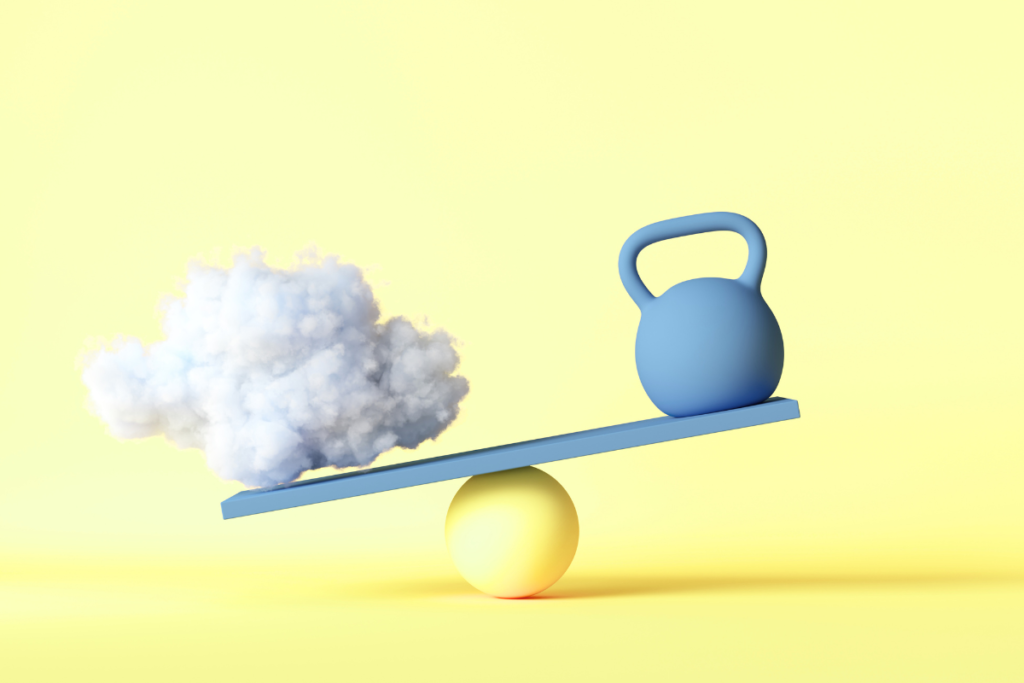
Ease and Value are Different Measures
There’s another trap here.
We can confuse the amount of effort something requires from us with the amount of value it creates for someone else.
But they are very different measures.
We experience our strengths from the inside. Other people experience their value from the outside.
You might think:
I just know how to explain things simply.
Someone else thinks:
Finally. I understand.
You think:
I just listen.
They experience feeling genuinely heard.
You think:
I just ask questions.
One of those questions changes the conversation.
You think:
I’m just good with people.
Someone else experiences trust, connection, or confidence because of how you made them feel.
What feels ordinary to us can be incredibly valuable to someone else.
And ‘natural’ doesn’t necessarily mean we were born knowing how to do it either.
Sometimes a capability feels effortless because we’ve spent years practising it.
Experience, feedback and repetition can turn something that once required conscious effort into instinct.
An experienced leader might say they can “just read the room.”
But perhaps what feels instinctive is actually the product of thousands of interactions, patterns noticed, mistakes made, and lessons learnt.
What feels ordinary to us may actually be expertise we’ve stopped noticing.
That’s why ease and value are different measures.
The value of a capability isn’t determined by how difficult it feels for us to use.
It’s determined by what it enables.
Strengths Deserve Development Too
Of course, recognising a strength doesn’t mean declaring:
Great. I’m naturally good at that. Job done.
Recognition is often the starting point.
Natural inclination might give us a head start. Experience might make something feel instinctive.
But deliberate practise, feedback and application allow us to turn those strengths into capabilities we can use intentionally.
Someone might naturally understand how other people are feeling and still need to develop their ability to navigate difficult conversations.
Curiosity becomes more useful when paired with the judgement to know which questions are worth pursuing.
The ability to simplify complexity becomes more valuable when paired with deep knowledge and an understanding of the audience.
Natural ability gives us potential. Deliberate development turns it into capability.
We have invested heavily in developing technical capability while often treating human capability as personality. If these strengths are becoming more valuable to the work ahead, they deserve deliberate practice, feedback and development too.
Recognising what we’re good at isn’t ego. Recognising what we’re good at gives us the awareness to develop and use it intentionally.
We can’t intentionally strengthen what we refuse to recognise
What Have You Been Taking for Granted?
Those 1,200 responses have made me think about the changing value of human capability.
Yes, technology is a big part of that shift. As some forms of knowledge, execution and output become easier to replicate, the value we create through interpretation, judgement, connection, and imagination grows.
But we also need to consider the valuable capabilities we dismiss because they come naturally to us.
Preparing for the future will require us to build new capabilities. But it may also require us to look differently at the capabilities we already have, recognising where they create value, and deliberately strengthen them for the work ahead.
Because what feels ordinary from the inside may be extraordinarily valuable from the outside.
So, be careful what you put the word ‘just’ in front of, it might be more valuable than you think.