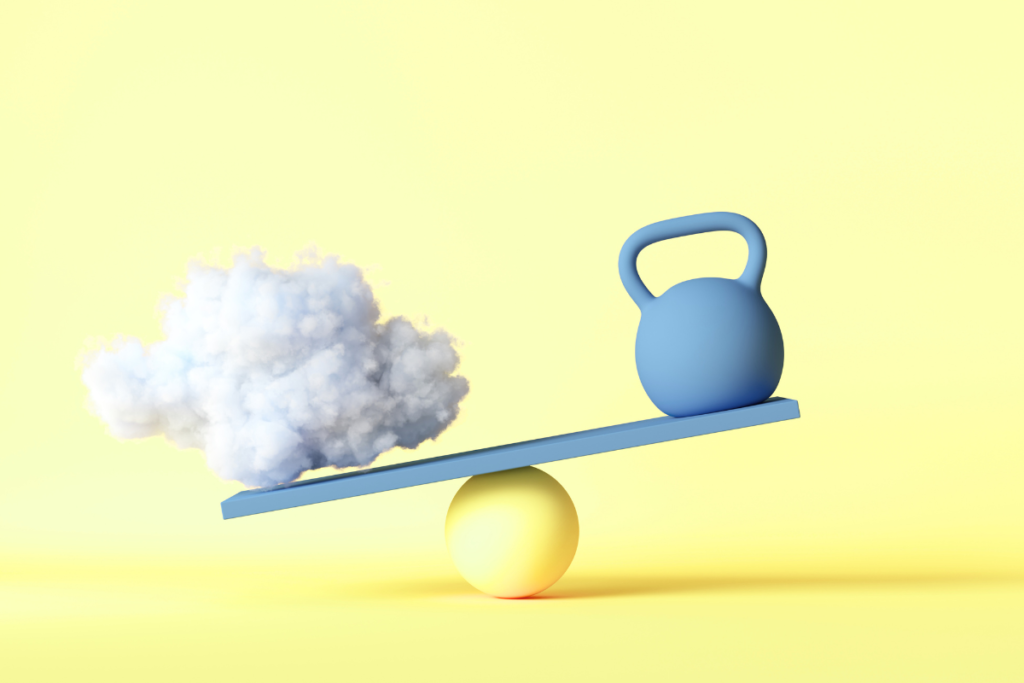
Last week in my Masterclass, I put three words on a slide: Mindset, Skillset, Toolset. The core elements of my Sustainable High Performance Stack. And then I asked a simple question: ‘What breaks first under pressure?’
Almost everyone said the same thing – Mindset.
Now that didn’t surprise me. But what does surprise me is what happens next… or doesn’t.
Because if we know mindset is the first thing to go, why is it the last thing we deliberately build?
Where We Undertrain
We see elite athletes talk about mindset very openly.
During the recent Winter Olympic games, freestyle skier, Eileen Gu, described treating her mind like an experiment – adjusting, testing, and refining it the same way she trains her craft.
The same can be said for Jessica Fox. In the lead up to winning gold at the Paris Olympics, Fox spoke about her mental preparation being just as important as her physical work. She had spent almost four years between Games putting herself into high-pressure environments to train her mind to better handle challenge.
Athletes don’t tend to leave their mindset to chance. They train it, most days. And the rest of us know this matters but rarely prioritise it as if it did.
In most workplaces, mindset will get a mention, but it’s not always treated as a core capability. It’s not built into learning, it’s not measured and rarely rewarded. And time to train, or even think about our thinking, isn’t protected in our calendars.
And yet, when it breaks, the cost shows up everywhere. Hasty decisions. Higher emotions. The kind of mistakes that only happen when people are reacting instead of thinking.
One of my previous leaders understood this. He blocked out an entire day each week just for thinking. His reasoning was simple: he had four days of meetings and needed one day to actually make sense of what they all meant. I’m trying to do the same. My Fridays are now for thinking, writing, developing ideas. It’s not easy to protect that time. But the difference it makes is significant.
Thinking about Thinking
To be clear, mindset and thinking aren’t the same thing. Mindset is the set of beliefs and frames that you operate from. Thinking is the process you use to examine and update those defaults. One shapes the other. And thinking about your thinking is the first step to training your mindset so you know what needs to shift.
In psychology, this process is called metacognition. The process of becoming more aware of your thought patterns before trying to change them. If mindfulness asks you to observe your thoughts without judgement, metacognition asks you to analyse them.
Why am I thinking this?
Is this helping me?
What else could be true?
This is a skill. And like any skill, it doesn’t develop by accident.
Our Environment Is Working Against Us
Even if you recognise the value of thinking more deliberately, we haven’t designed our environments for it.
We are so eager to escape boredom, to fill every quiet moment, that we’ve trained ourselves out of the habit. The queue for coffee. The run or gym session. The commute home. The five minutes between meetings. These used to be moments where our minds could wander, process, make connections. Now they’re filled with scrolling, podcasts and constant pings. It takes real effort to resist the urge but I see it as time back for more mental reps.
As Nicholas Carr writes in The Shallows, the more time we spend scanning and skimming online, the more our brains adapt to that mode of processing, quick, shallow, and easily distracted. We’ve changed the way we think. Deep thinking has been replaced by efficiency and multitasking. Reactivity has been rewarded.
So we might be moving faster but we’re actually thinking less.
And today that is a problem. Because the World Economic Forum’s Future of Jobs Report highlights thinking-related skills as some of the fastest growing through to 2030. Specifically, analytical thinking is ranked as the single most important core skill worldwide, with about seven in ten employers considering it essential today and expecting it to become even more important over the next few years as we all attempt transformation.
The differentiator is no longer just what you produce… but how well you think.
So what could you be building on?
-
Where in your week do you have time to think, not just do? If the answer is nowhere, that’s your first move.
-
After your next high-pressure moment, resist the urge to immediately move on. Sit with it for two minutes. What did we learn? What will we do differently next time?
-
Try resisting the screens in the micro-moments and use that time to just let your mind wander instead – you never know where it will end up!
Mindset doesn’t break under pressure by accident, it breaks because we never trained it to hold.
And in a world moving this fast, the ability to pause and think might be the ultimate performance advantage.
So, when was the last time you actually stopped to think about your thinking?